310-913-9477
glenn@shelhamergroup.comCalDRE #01950995
Buying or selling in Glassell Park?
I am Glenn Shelhamer, broker of The Shelhamer Group, and I work Glassell Park every week. Homes here that sell in the first thirty days close above asking. Homes that sit do not. The difference is decided the week you list.
Work with a Glassell Park real estate agent →Glassell Park still feels like old Los Angeles.
Not the polished version.
The real version.
Tucked between Mount Washington, Highland Park, Atwater Village, and Eagle Rock, Glassell Park has long existed as one of Northeast LA’s quieter working-class neighborhoods. For decades it was defined by rail yards, factories, bakeries, auto shops, hillside homes, and immigrant families building lives just outside the spotlight of trendier neighborhoods nearby.
Then people started catching on.
Artists moved in.
Musicians moved in.
First-time buyers got priced out of Silver Lake and Highland Park and started looking east.
Developers noticed.
Coffee shops followed.
But unlike some Los Angeles neighborhoods that feel almost fully transformed, Glassell Park still carries grit around the edges in a way that feels authentic.
That’s exactly why people love it.
Today, Glassell Park real estate attracts buyers looking for:
- historic homes
- hillside views
- creative energy
- relative affordability
- proximity to Northeast LA hotspots
- and a neighborhood that still feels grounded in actual community life
Glassell Park isn’t trying to impress you.
Which is probably why it does.
Glassell Park Market Data: October 2026
Here is what Glassell Park actually costs right now, straight out of the MLS. Not a portal estimate. Real closed sales.
| Median sale price | $1,175,000 |
| Median days on market | 16 |
| Closed sales, past 12 months | 96 |
| The median home sold | 3 bed, 2 bath, 1,527 sq ft |
| Homes actively for sale | 39 |
| Median asking price right now | $1,190,000 |
| Months of supply | 4.9 |
| Change from a year ago | Down 1.2% |
The number that actually matters
About 69% of homes sold in 30 days or less. Those averaged 104.7% of asking price. The ones that took 31 to 60 days averaged 99.6%. On the median asking price that gap is roughly $59,000.
Speed is not a bonus in this market. Speed is the price. A house that sits is not waiting for the right buyer, it is telling every buyer something is wrong with the number.
The split here is stark. Homes that sell do it in a median of 16 days. Homes currently sitting on the market have a median of 43 days. Prices turned down 1.2% while volume fell about 22%, from 123 sales to 96, so this is still a supply story rather than a demand story. The market here is not slow. The overpriced half of it is.
These figures cover The MLS Area 94, Glassell Park. Single family and condo, no price or size filters. Source: The MLS/CLAW, Area 94 (Glassell Park). Closed sales October 1, 2025 through October 1, 2026, 96 sales. Active and pending inventory as of October 1, 2026. Data deemed reliable but not guaranteed. Compiled by Glenn Shelhamer, The Shelhamer Real Estate Group, CalDRE #01950995.
Where Is Glassell Park?
Glassell Park sits in Northeast Los Angeles and borders:
- Eagle Rock
- Mount Washington
- Atwater Village
- Cypress Park
- Glendale
- Elysian Valley
The neighborhood stretches across both flatter industrial corridors and steep residential hillsides, giving Glassell Park an unusually varied feel block by block.
San Fernando Road cuts through the western edge with old industrial buildings, auto shops, bakeries, warehouses, and railroad history still embedded into the landscape. Meanwhile, the hillside streets climbing toward Mount Washington feel quieter, greener, and heavily residential.
Glassell Park lives somewhere between industrial LA and hillside Northeast LA.
That contrast defines the neighborhood.
Living In Glassell Park
Glassell Park has changed a lot over the past twenty years.
But it still feels more local than performative.
You’ll find:
- longtime Latino families
- artists
- musicians
- young families
- creatives
- first-time buyers
- renters
- architects
- people renovating old Craftsman homes
- and people who’ve lived here for generations
That mix matters.
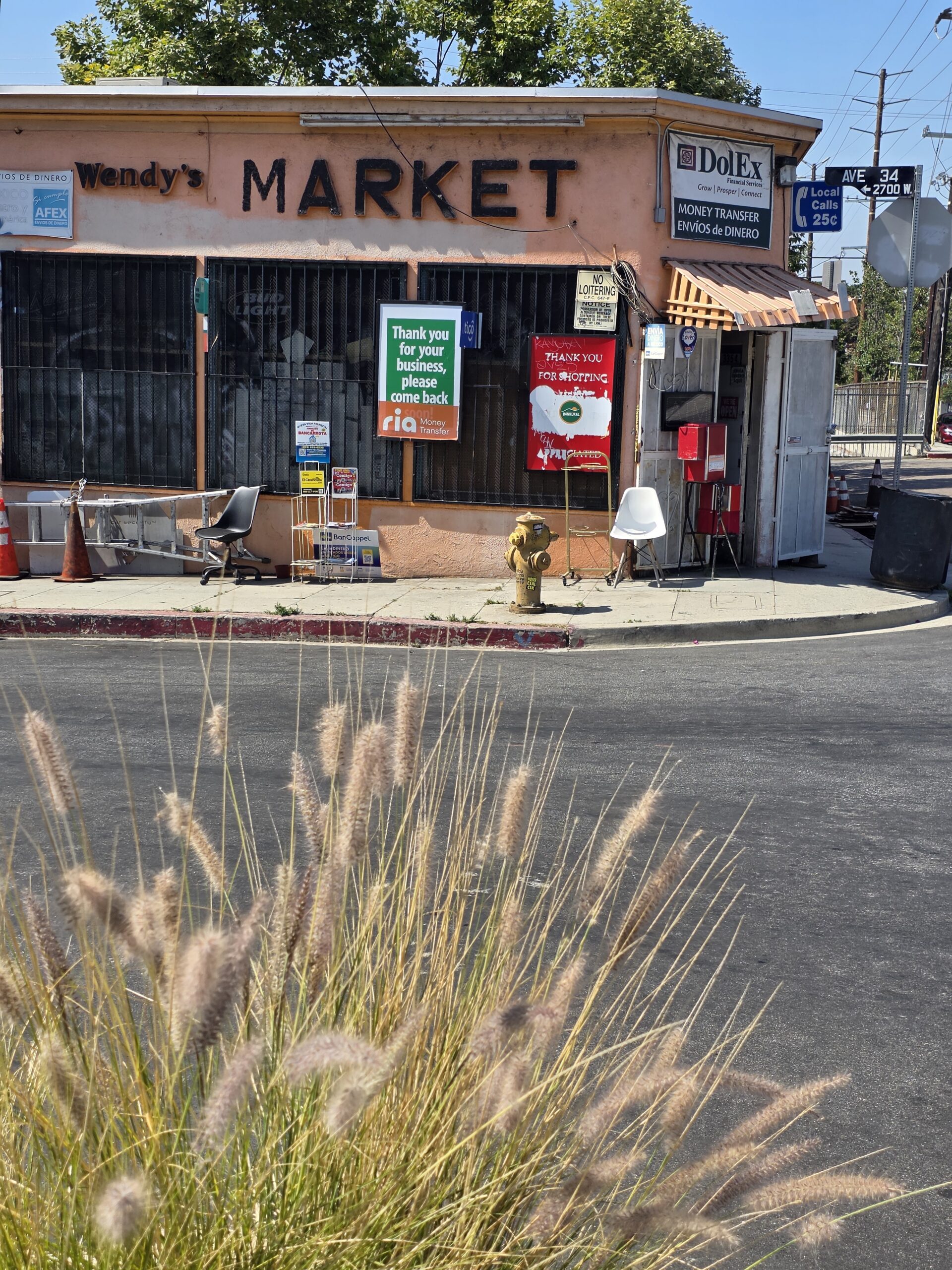
Unlike neighborhoods that feel fully curated for social media, Glassell Park still has rough edges, working-class roots, and genuine neighborhood texture.
You’ll see taco stands next to modern coffee shops.
Body shops next to architecture studios.
Vintage stores next to family-run bakeries.
That collision is part of the appeal.
And because Glassell Park sits near so many major Northeast LA neighborhoods without fully becoming one of them, buyers often see it as one of the last areas where you can still find relative value with long-term upside.
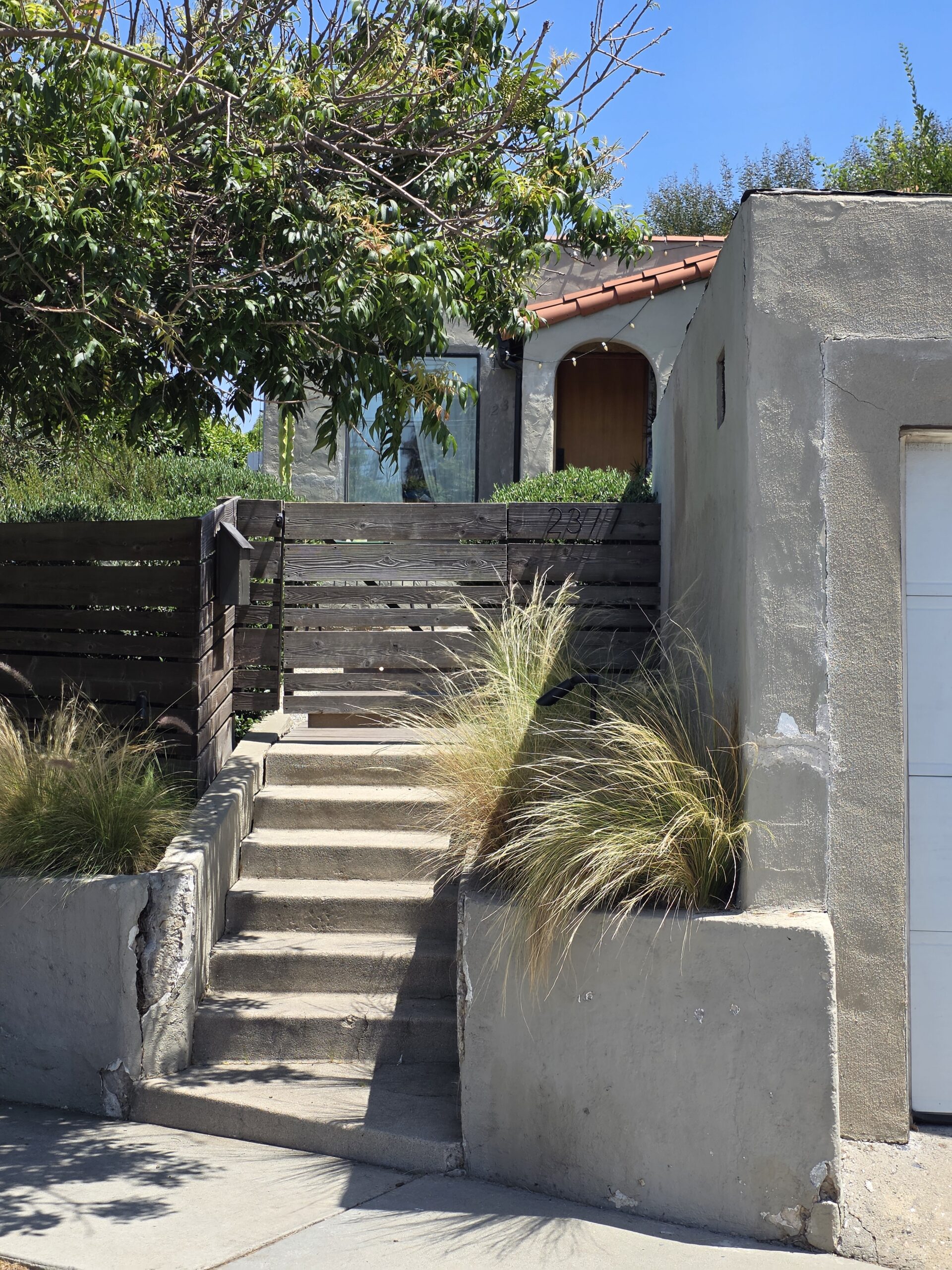
Glassell Park Real Estate & Architecture
Glassell Park real estate is wildly diverse.
The neighborhood includes:
- Craftsman homes
- California bungalows
- Spanish-style homes
- mid-century houses
- hillside properties
- duplexes
- income properties
- modern architectural remodels
- contemporary new construction
The hillsides in particular have become increasingly popular among buyers looking for:
- city views
- creative privacy
- larger lots
- and architectural potential
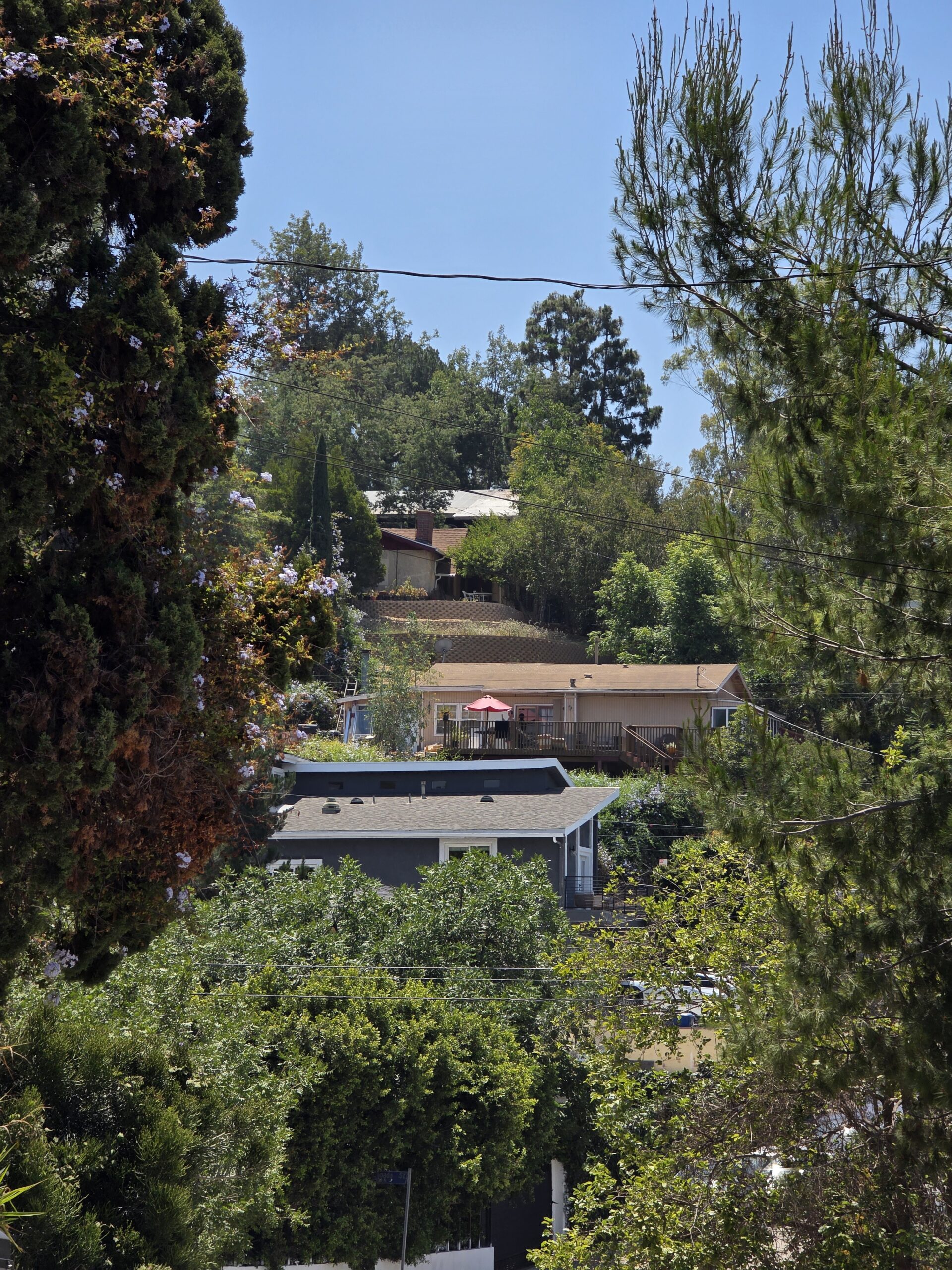
Many homes throughout Glassell Park were built in the early 1900s and still retain original character details, though the neighborhood has also seen an increase in modern renovations and new contemporary builds over the past decade.
Compared to nearby neighborhoods like Silver Lake or Los Feliz, Glassell Park historically offered buyers more space and lower entry prices, which is one of the reasons demand accelerated so quickly.
And while prices have risen dramatically, many buyers still view Glassell Park as one of Northeast LA’s more accessible hillside neighborhoods.
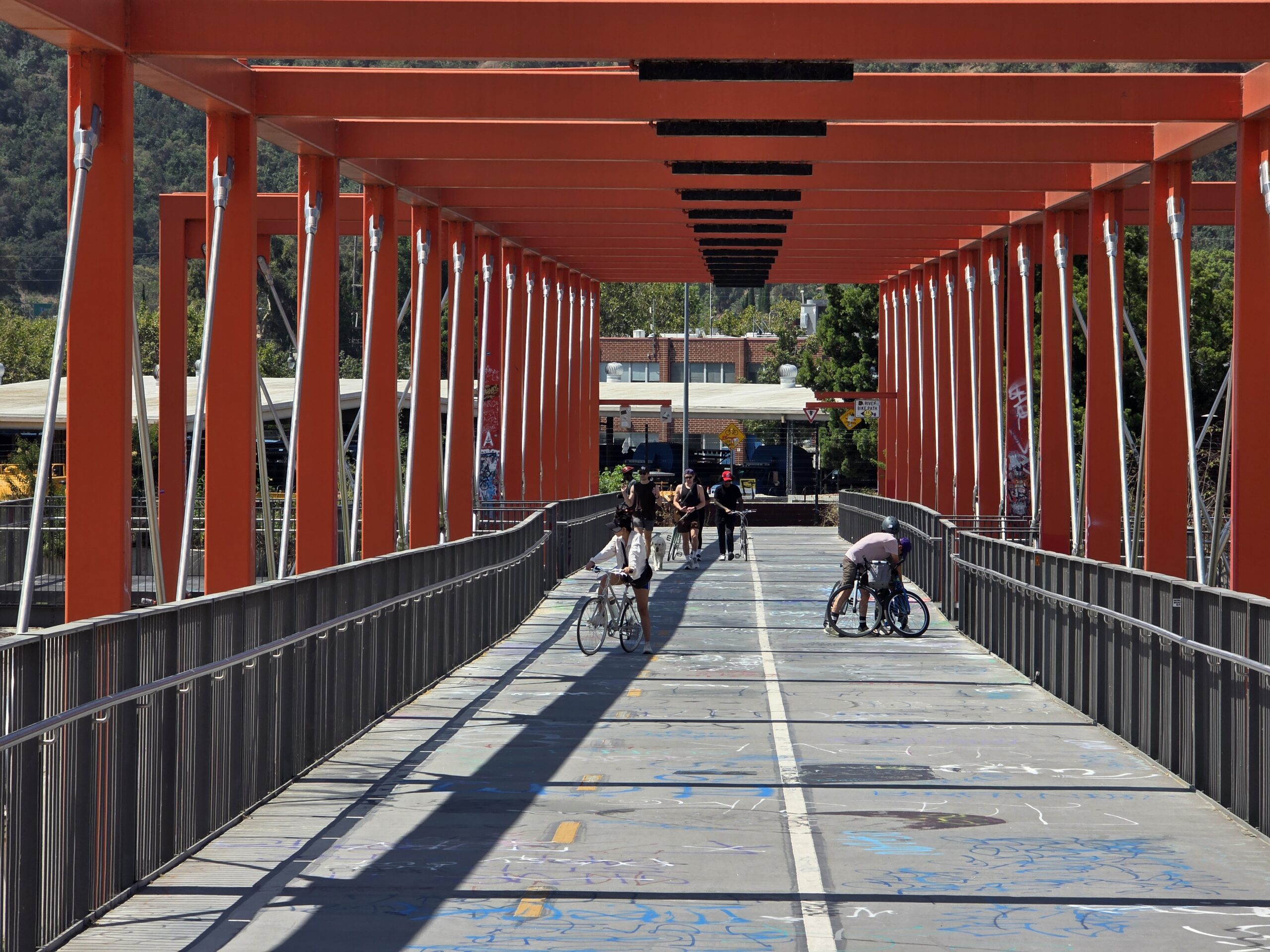
Rio de Los Angeles State Park & Taylor Yard
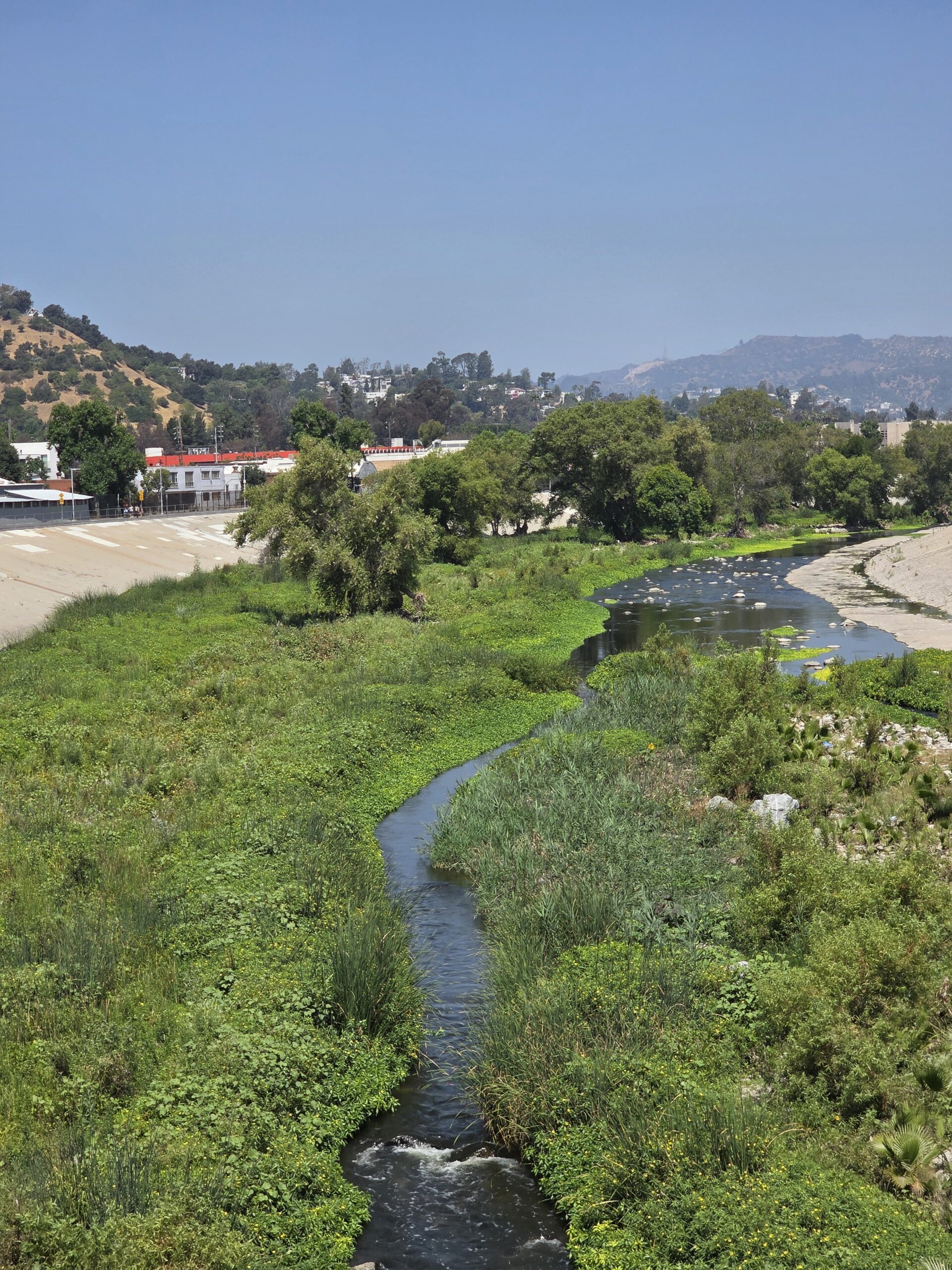
One of the most important transformations in Glassell Park has been the revitalization of the Los Angeles River corridor and the creation of Rio de Los Angeles State Park.
What was once heavily industrial rail yard land became one of the neighborhood’s defining public spaces.
Today the park feels alive almost every day of the week:
- soccer games
- families gathering
- street vendors
- joggers
- cyclists
- kids everywhere
- community events
- views of the river and surrounding hills
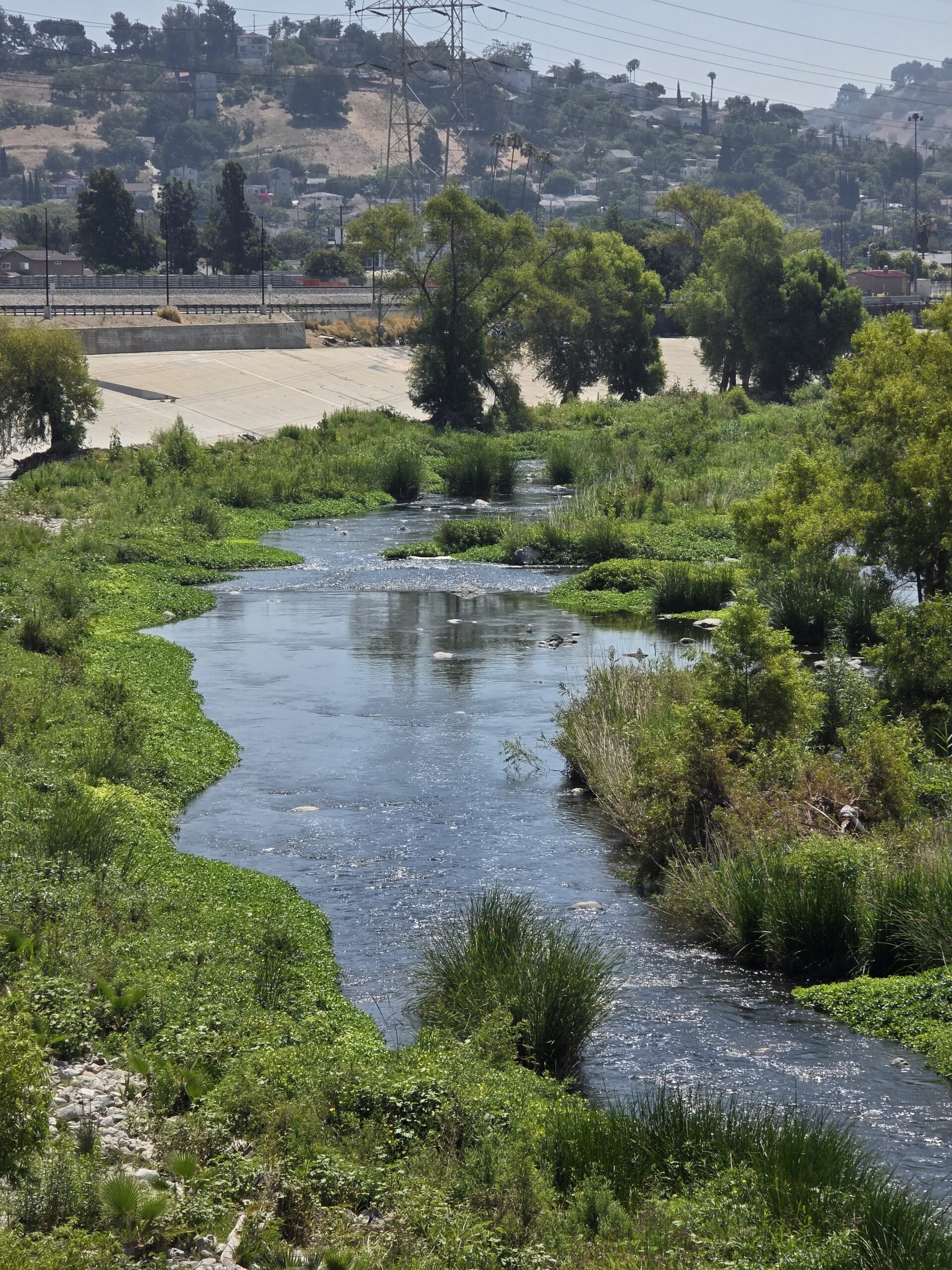
The Taylor Yard redevelopment continues reshaping the area and remains one of the largest river revitalization projects in Los Angeles.
That evolution has played a massive role in Glassell Park’s growth and long-term appeal.
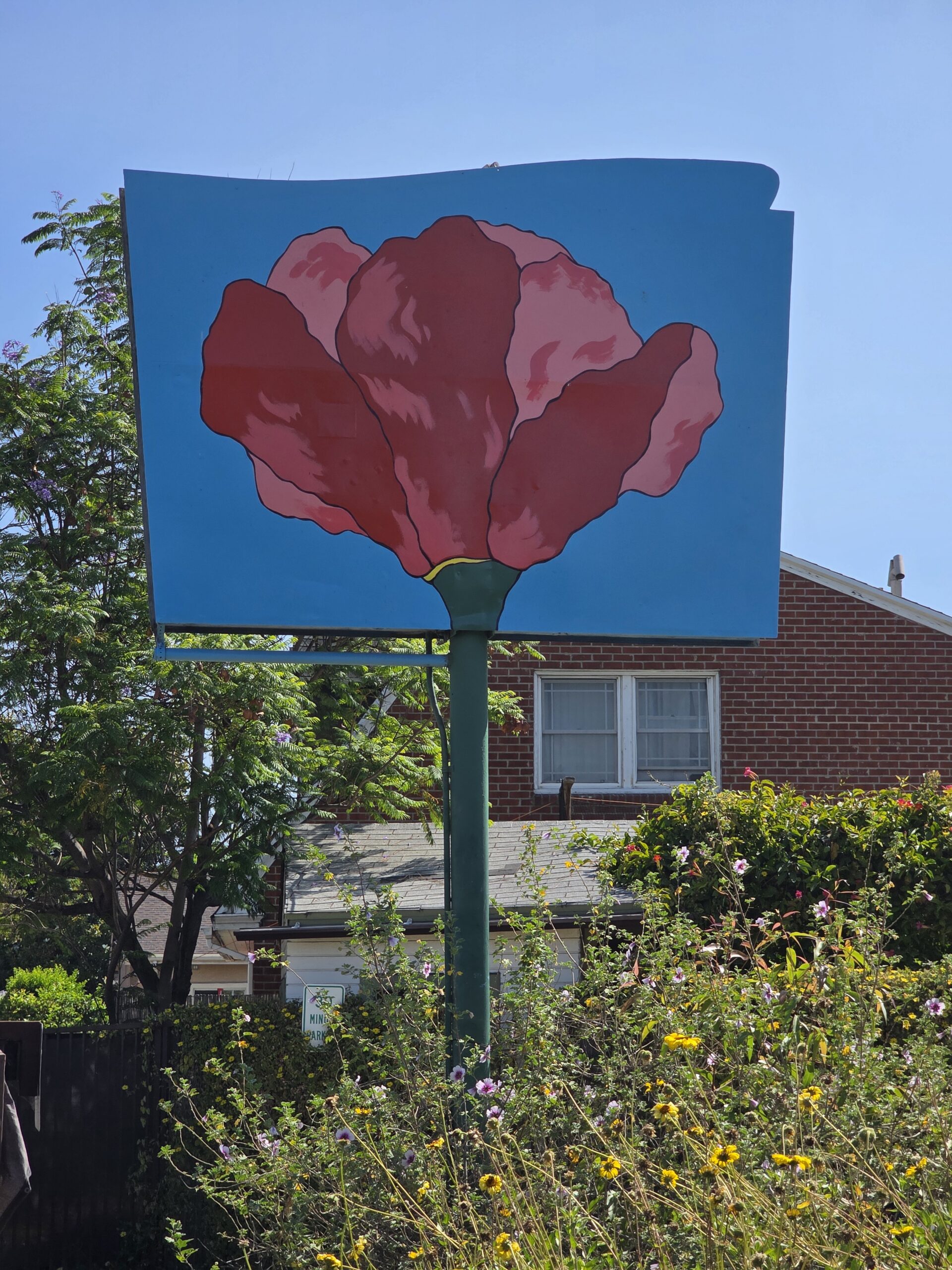
Glassell Park Art, Music & Creative Culture
Glassell Park has always had creative energy hiding inside industrial spaces.
Old factories and warehouse buildings throughout the neighborhood gradually transformed into:
- music studios
- art workshops
- maker spaces
- dance studios
- furniture fabrication shops
- recording spaces
- galleries
- creative workspaces
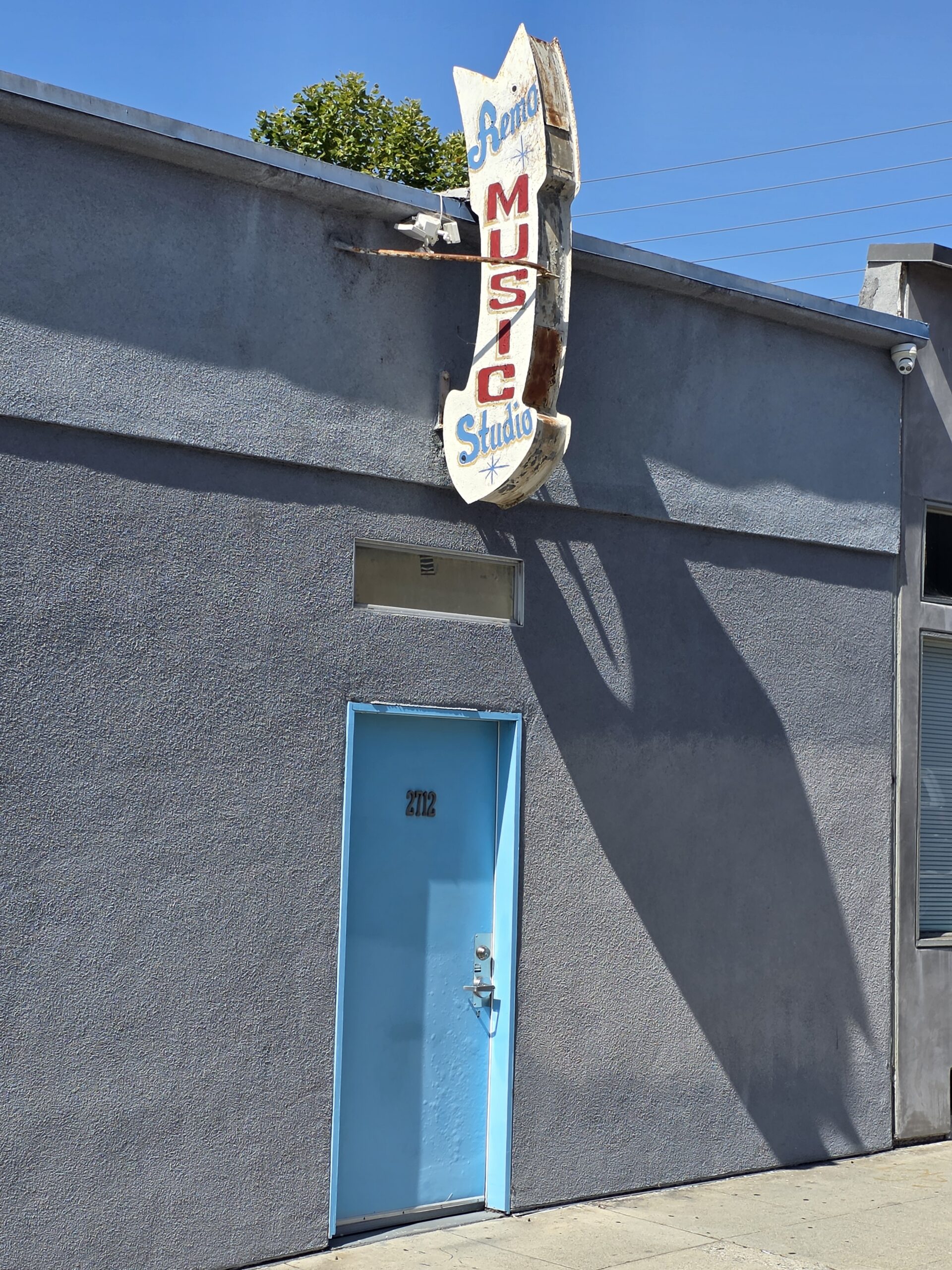
There’s a DIY spirit here that still feels very intact.
Glassell Park doesn’t always advertise itself the way nearby neighborhoods do. A lot of the interesting stuff is still slightly hidden behind roll-up warehouse doors, side streets, converted garages, or low-key storefronts.
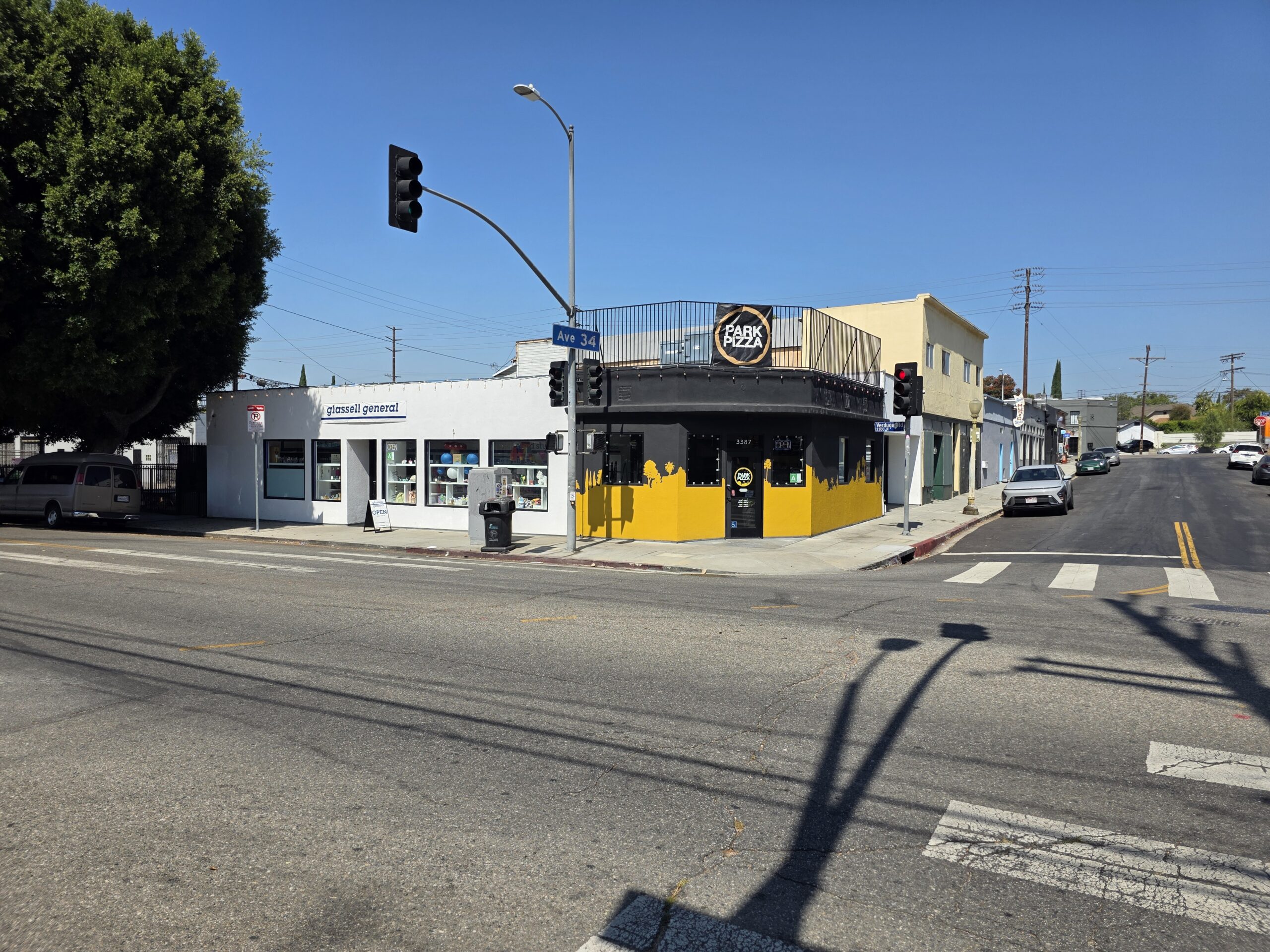
Which honestly makes discovering it more fun.
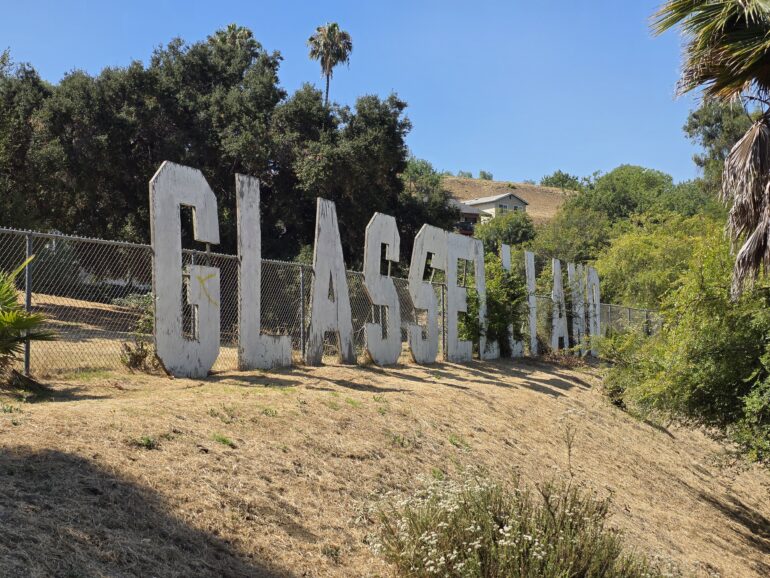
The neighborhood’s “Glassellland” sign overlooking the hills became a perfect symbol for the area:
a little weird,
a little self-aware,
a little punk rock,
very Northeast LA.
Food, Nightlife & Local Spots
Glassell Park nightlife is still relatively understated compared to Highland Park or Silver Lake.
That’s part of the charm.
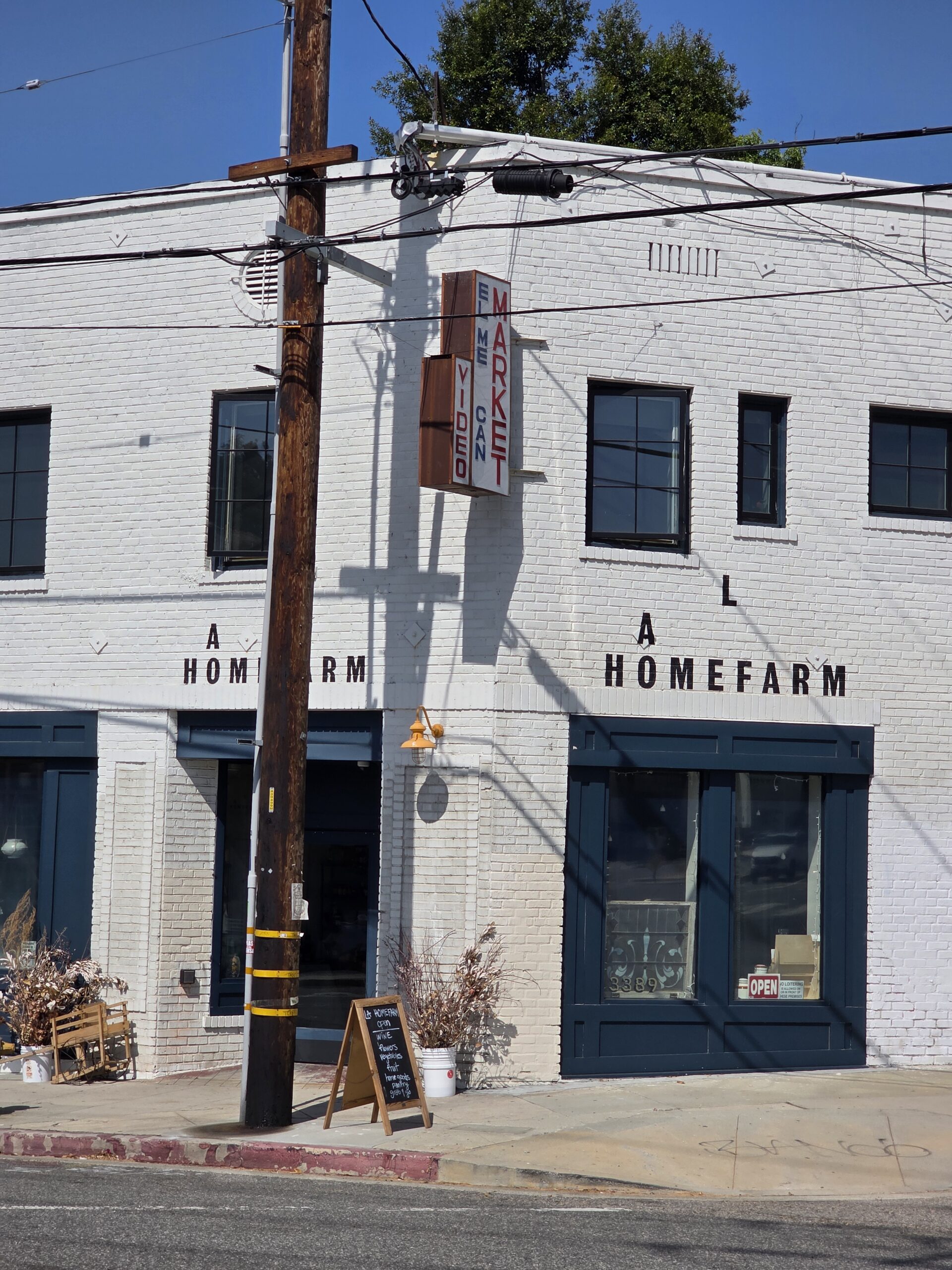
The Verdugo Bar remains one of the neighborhood’s defining gathering spots with its beer garden, rotating taps, DJs, and longtime local crowd. Nearby taco stands, bakeries, pupuserias, corner markets, and low-key restaurants give the neighborhood its everyday energy.
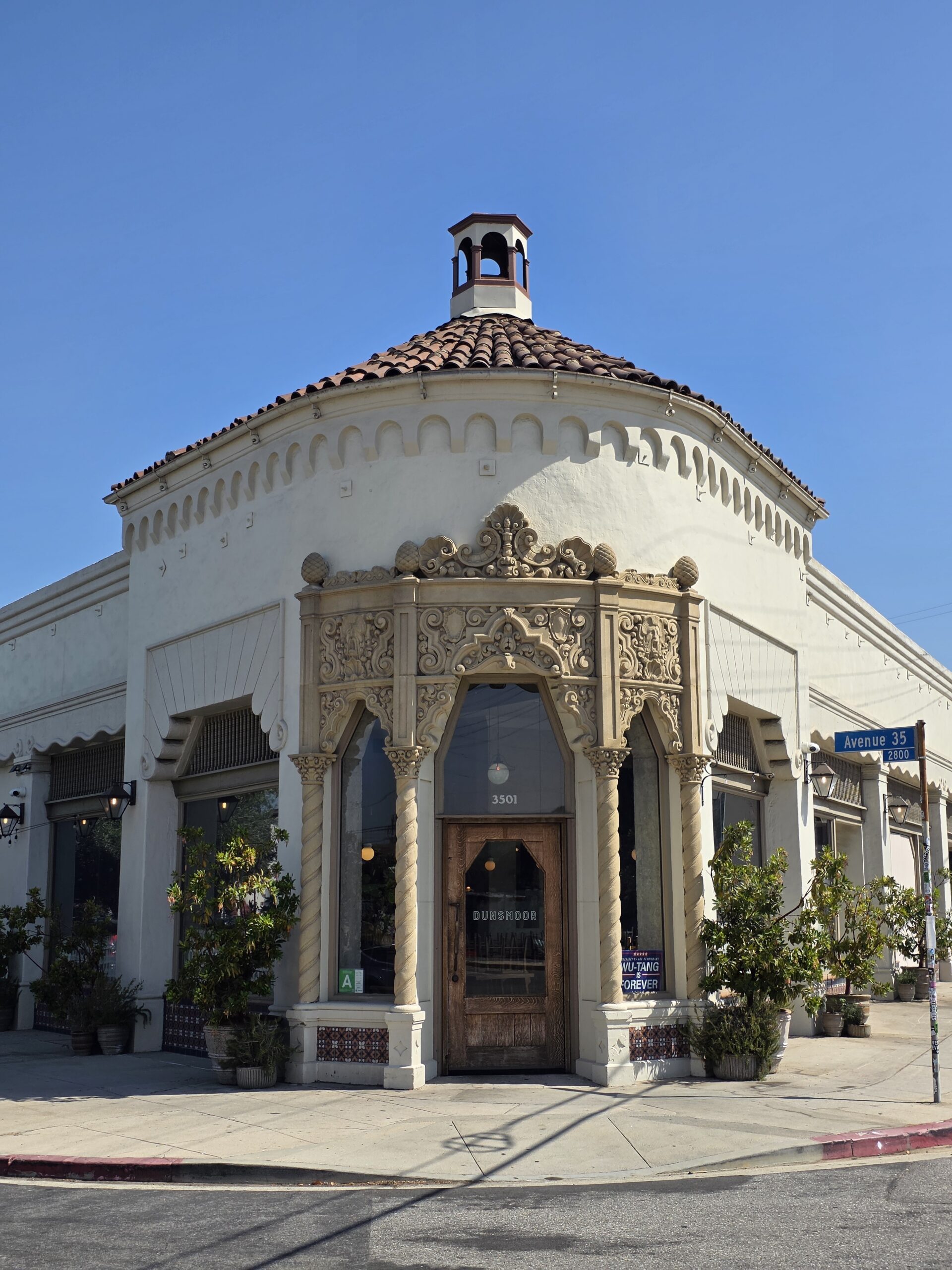
New Spots like Dunsmore, The Grant Bar, and Bub and Grandma’s are the hottest ticket in NELA right now, boosting local demand and tourism from all over the world.
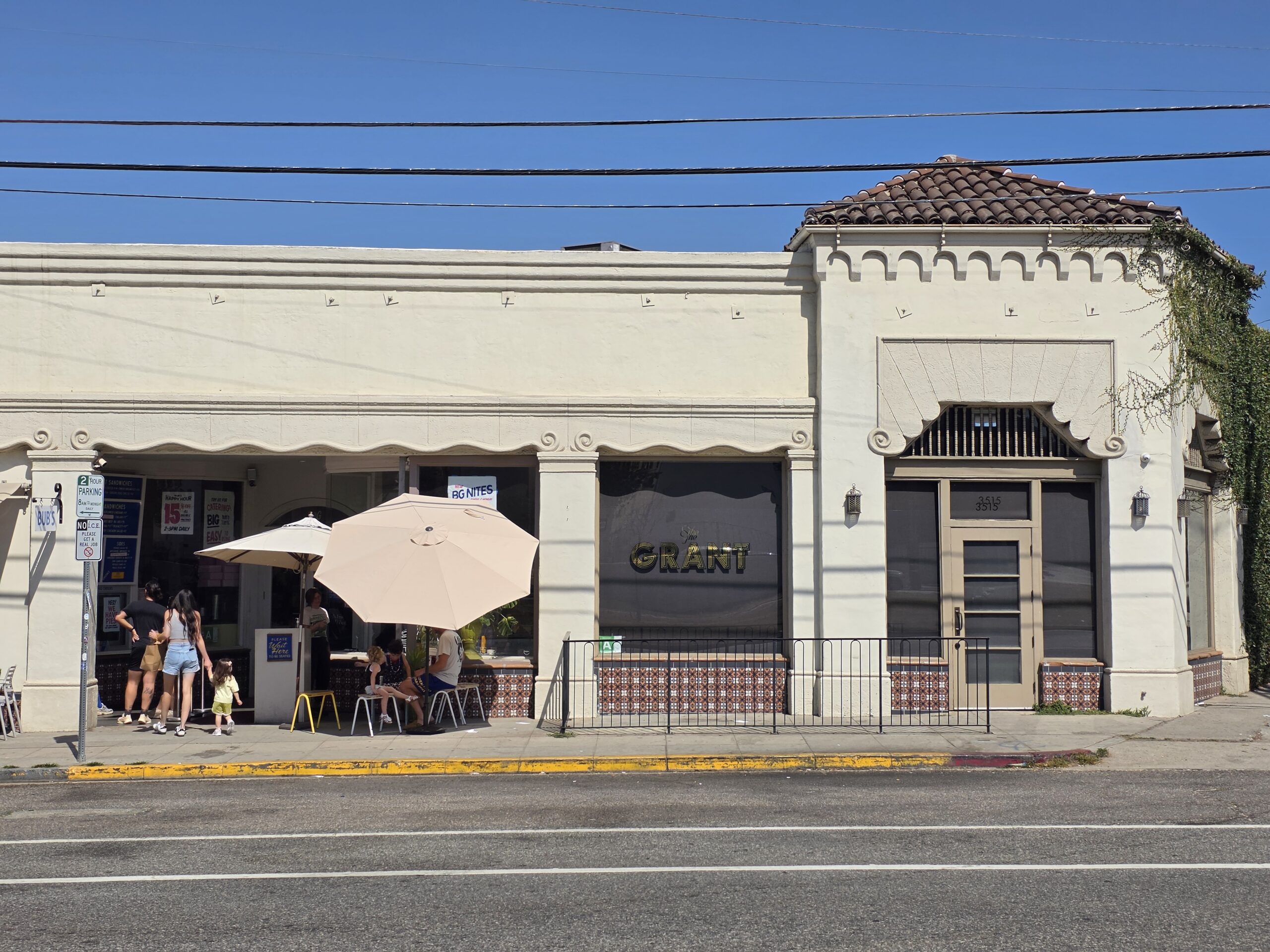
Glassell Park is less about flashy nightlife and more about:
“Where should we grab tacos and hang out for a few hours?”
That slower, more neighborhood-driven atmosphere keeps people around.
Glassell Park History
Glassell Park traces its roots back to Rancho San Rafael, originally granted to José María Verdugo during the Spanish era.
The neighborhood later took its name from Andrew Glassell, an attorney and landowner who helped shape development throughout the region.
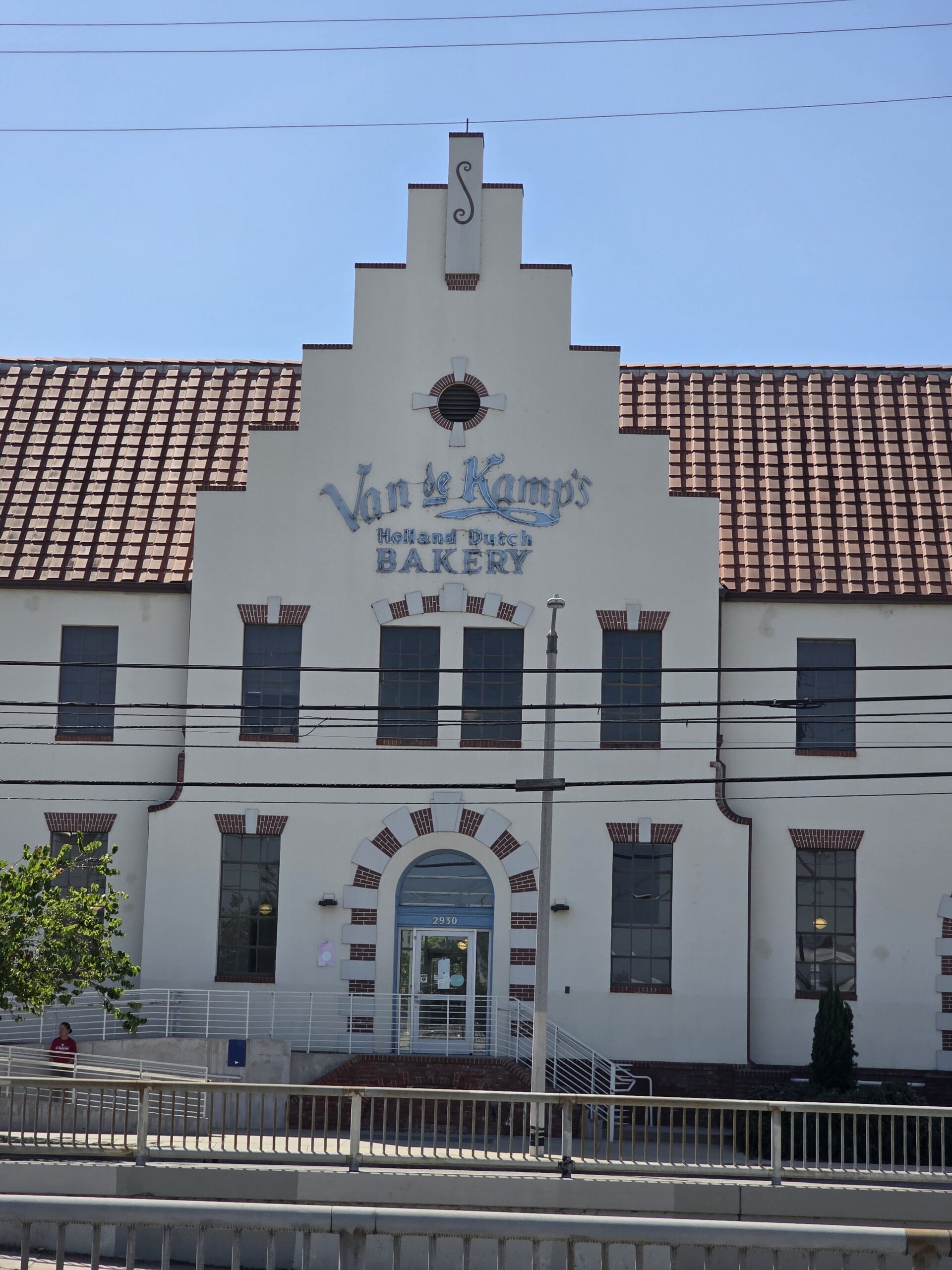
By the early 1900s, Glassell Park became closely tied to:
- rail infrastructure
- manufacturing
- baking industries
- industrial growth
- and working-class housing expansion
Taylor Yard became one of the region’s major railroad hubs, while bakeries and factories helped establish the neighborhood as part of Los Angeles’ historic industrial backbone.
Some of those old industrial structures still stand today, giving the neighborhood much of its visual character and texture.
Glassell Park has always been tied to movement:
trains,
industry,
migration,
artists,
young buyers,
new families,
and the constant reinvention that defines Los Angeles itself.
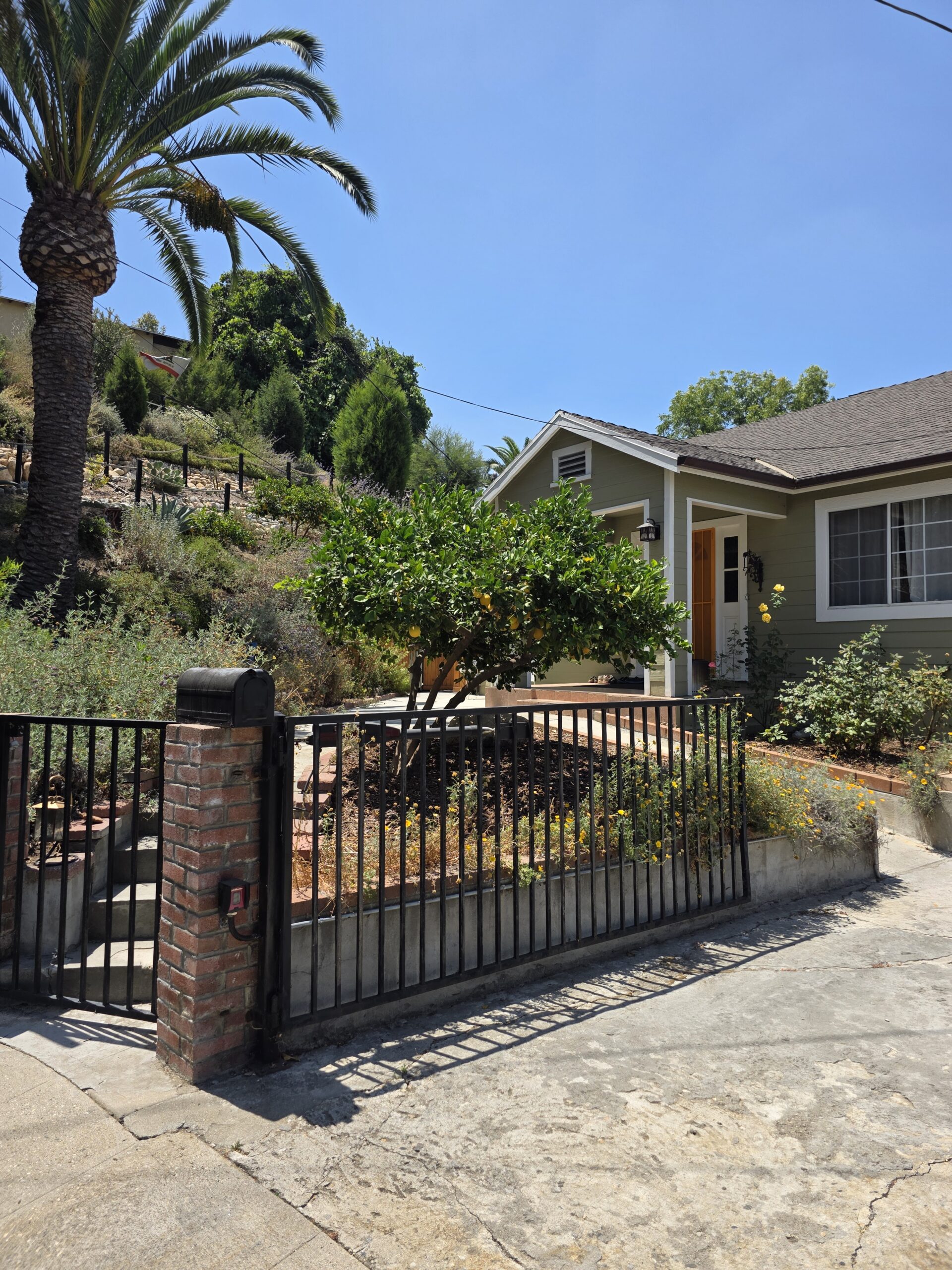
Buying A Home In Glassell Park
Buyers searching for Glassell Park homes for sale are usually looking for:
- character homes
- hillside properties
- creative energy
- relative value
- proximity to Northeast LA
- architectural potential
- and a neighborhood with long-term upside
Glassell Park appeals to buyers who want access to the Eastside lifestyle without the fully polished feel of some neighboring communities.
It still feels evolving.
Still layered.
Still honest.
And that’s becoming harder and harder to find in Los Angeles.
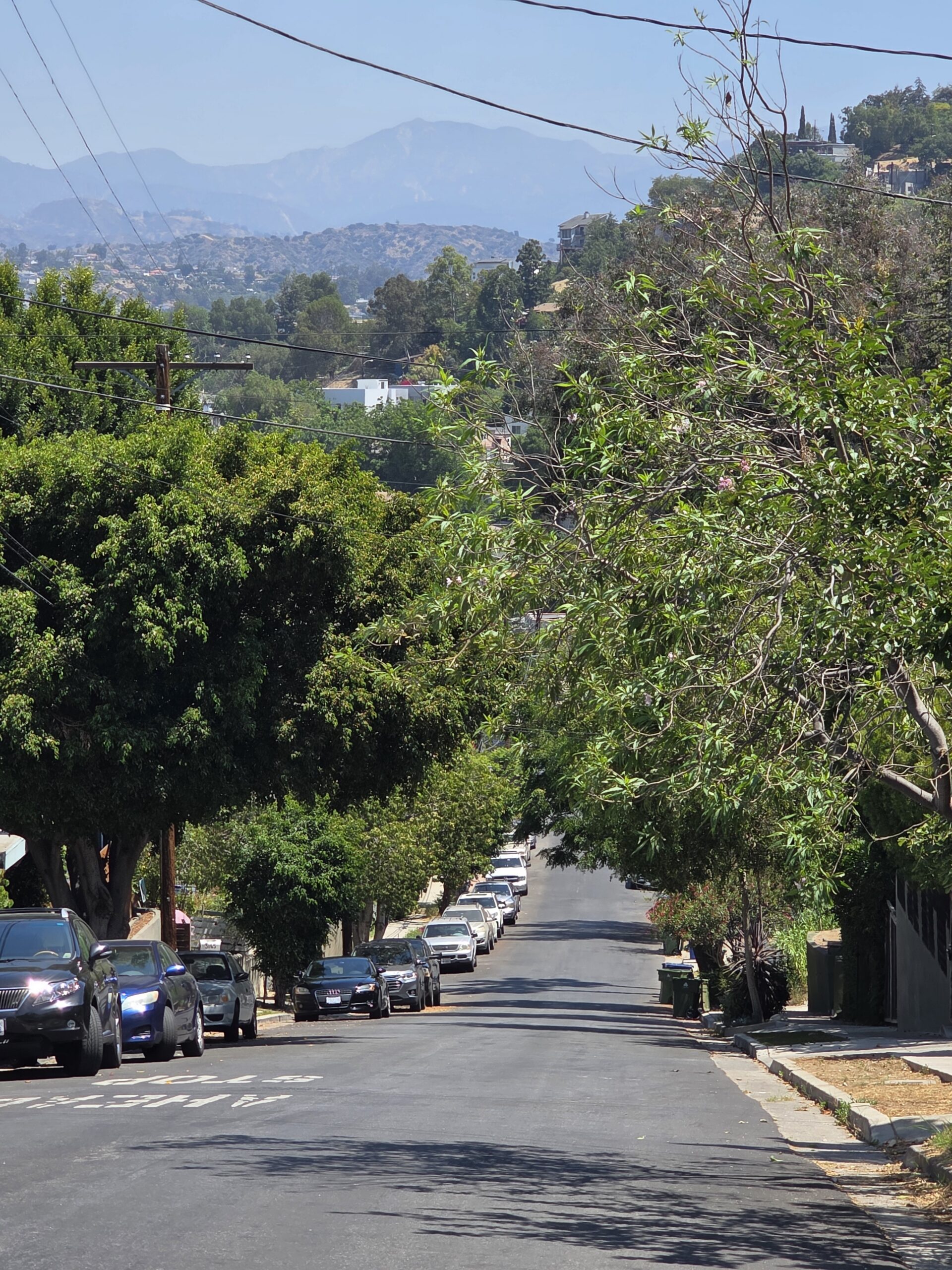
Search Glassell Park Homes For Sale
Browse Glassell Park homes for sale, hillside homes, architectural properties, Craftsman homes, duplexes, income properties, and new listings throughout Northeast Los Angeles.
If you’re considering buying or selling real estate in Glassell Park, Mount Washington, Echo Park, Eagle Rock, or Atwater Village, the Shelhamer Group specializes in Northeast Los Angeles real estate and local neighborhood expertise.
Meet Glenn Shelhamer
I’m Glenn Shelhamer, a Northeast Los Angeles Realtor and founder of the Shelhamer Group.
I’ve spent years living, working, raising my family, and helping clients buy and sell homes throughout Northeast LA, including Highland Park, Glassell Park, Mount Washington, Eagle Rock, Atwater Village, Silver Lake, and the surrounding neighborhoods.
This isn’t just a market I work in. It’s where my life happens.
My kids go to school here.
I support local businesses here.
I know the streets, the architecture, the schools, the pockets, the hillsides, the weird little blocks, and the personality each neighborhood brings.
Northeast LA is layered. Every neighborhood feels different. Every street can feel different. Some homes look incredible online and become a completely different conversation once you start digging into the details.
That’s where local experience matters.
Whether you’re buying your first home, selling a longtime property, relocating, investing, or simply trying to better understand the Northeast Los Angeles real estate market, I’m always happy to talk through what’s happening and help point you in the right direction.
Questions about Northeast Los Angeles real estate?
310-913-9477
@theshelhamergroup
glenn@shelhamergroup.com
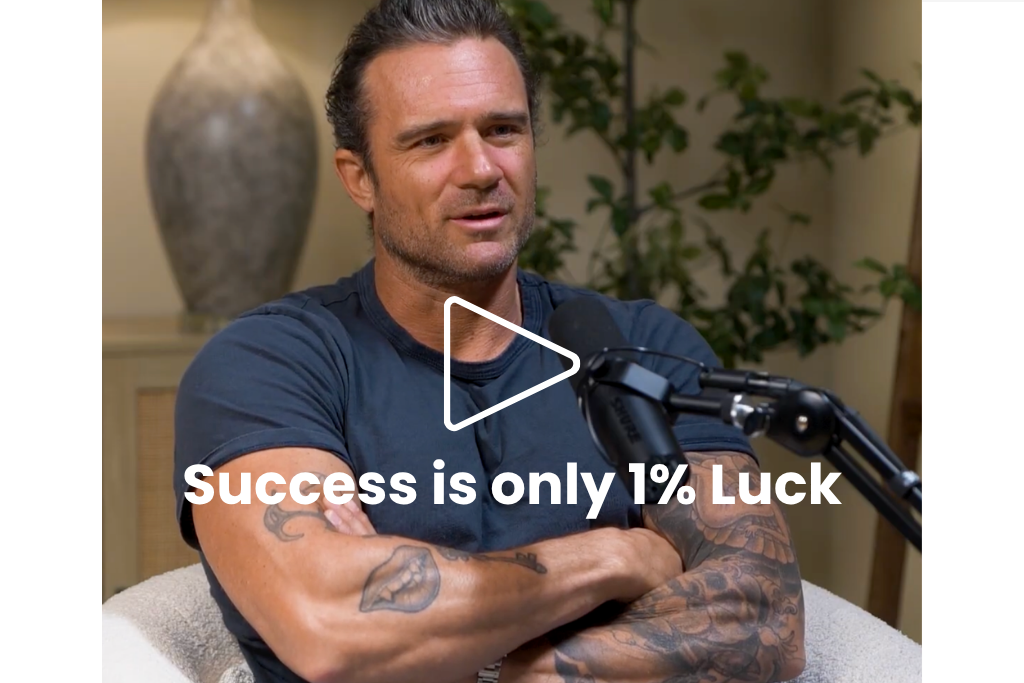
Working with an agent here
Who sells Glassell Park?
Glassell Park homes that sell inside the first thirty days clear 5.2 more points of asking price, about $59,000. Pricing is what decides which side of that line a listing lands on.
Glassell Park Real Estate Agent